March 9, 2012

Day 56 - Acts 25

After two years of being in prison, Paul finally gets his chance to go to trial with Festus coming into power.


Will Paul go free? Will he stay in prison or will he be executed?


Let's dig in and find out!

Acts 25 (Read it here)

Only three days after taking over Felix's responsibilities, Festus went to Jerusalem to hear the same accusations from the priests and religious leaders. (vs. 1-2) They begged Festus for Paul to be transferred to Jerusalem to stand trial, even though it was never there intention for him to actually survive that long. (v. 3) Festus refused and, instead, told all the religious leaders that the trial would happen in Caesarea. (v. 4-5)

When the trial commenced, the religious leaders (again) made many serious accusations they couldn't prove. (v. 7) This is exactly what Paul had told Felix, too.

Paul, with supreme confidence, tells Festus that he is not guilty of any crime against the Jewish laws or the temple or the Roman government. (v. 8) Yet Festus had the same issue as Felix with wanting to please and keep the peace with the Jews. So he asked Paul if he'd be willing to go back to Jerusalem to stand trial. (v. 9)

Of course, Paul knows the Jews want him dead and he refuses to die just to appease their hatred! If he is found guilty by an unbiased ruler, that's different. Paul not only demands that the trial stay under the authority of Roman authority, but he also demands that Caesar (the emperor of Rome) hear his testimony personally! (vs. 10-11)

After a short conference with his advisers, Festus agrees to have Paul give his testimony in front of Caesar. (v. 12)

That seemed awfully easy.

One has to keep in mind that Felix was very familiar with Paul and this Christian movement but not Festus.  Festus was basically a rookie governor; dealing with Jews and Christianity was new to him (he seems to not even know who Jesus is in verse 19 and he says that he didn't know "how to investigate these things" in verse 20). Another huge difference between Felix and Festus was the content of their character, too.  Felix was known as being corrupt and full of arrogance while the historical tellings of Josephus was much more kind to Festus as he was described as honorable and prudent. Perhaps this is the reason why King Agrippa paid respect (or as the original Greek would imply, gladly accepted Festus' offer) by traveling to Caesarea.

Also, just because Paul appealed to Caesar didn't mean that the actual Caesar would hear his testimony.  The Caesar at this time was Nero (who would become one of the biggest enemies of Christianity in the near future).  Trust me, Paul wouldn't have wanted Nero there. Nero even killed his own mother after she voiced opposition about him dating a married woman!

Similar to Felix bringing his wife to hear Paul, King Agrippa does the same by bringing his wife, as well. Why? Perhaps the reason why is because Agrippa is the brother of Felix's wife, Drusilla. I wouldn't doubt that Drusilla had interesting things to say about Paul to her brother, Agrippa.


Festus caught Agrippa up on everything about the case. (v. 14) We get the importance, again, about how Roman citizens cannot:
  • Be condemned without a trial (v. 16, the trial has to be overseen by Roman authority, too)
  • Cannot be executed for breaking Jewish religious laws
In verse 21 (and verse 25), Festus is still considering sending Paul to Caesar, but Agrippa wants to hear Paul first. Festus happily obliges. (vs. 21-22)


When King Agrippa and his wife Bernice arrive at the auditorium they show off their high status by having military officers and other VIPs accompany them. (v. 23)

Festus begins by clearly stating that he believes that Paul has done nothing deserving death, (v. 25, blah blah blah, Felix, Pilate and now Festus, that's what they all say) however, Paul begged for a higher authority to hear his side of the story. That's where Agrippa comes in. (v. 26) Festus makes it clear that today he nor Agrippa will be deciding if he's guilty or innocent. Their job is to define exactly what Paul is being charged with! (v. 27) After that, perhaps they'll send him to Caesar.

Interesting.  Where does this go from here?  Check back tomorrow.

Questions

1.) Pilate, Felix and Festus all have the issue of wanting to keep the Jews happy.  They go so far as to go against their personal opinions of Jesus and Paul.  Are there people you don't agree with but you treat them nice because you don't want trouble?  What's the problem with being fake like that?

2.) Drusilla, the wife of Governor Felix, probably had compelling things to say regarding Paul to her brother, Agrippa.  Has there ever been a time where someone has told you something profound about God or Jesus that you just had to tell someone else? If so, what was it and how did the other person react?

March 7, 2012

Day 55 - Acts 24

So what will happen to Paul?  

Will Felix buckle under the pressure of Ananias and the high council, as Pilate did, and execute Paul?

Will Paul defy the religious leaders once again and survive?


Let's find out together!


Acts 24 (Read it here)

Ananias, the high priest, arrives in Caesarea five days later with his posse, which included other leaders and a lawyer, Tertullus. (v. 1)

After buttering up Felix with platitudes (v. 3), Tertullus stated that Paul was guilty of:
  • Being a ringleader of the trouble-making cult of the Nazarenes (v. 5, the term "Christian" was only used in Antioch at this point not universally, but "Nazarenes" did imply followers of Jesus Christ, the Nazarene)
  • Desecrating the temple (v. 6, Tertullus doesn't mention how but we can assume by Paul's response in verse 12 that he is charging Paul with being irreverent or causing a scene in the temple)
Did you notice that verse 7 was missing in this passage? 

This, most likely, means that the oldest copies of this testimony did not include this quote from Tertullan to Felix, "We would have judged him by our law, but Lysias, the commander of the garrison, came and violently took him away from us, commanding his accusers to come before you." This means that this quote was probably added many years after Luke's writing by a scribe, which would bring its authenticity into question. So the New Living Translation omits it.  We'll talk about this principle again when we get to the end of the book of Mark.


Back to the trial. 

The other leaders all gave supporting testimony to Tertullus' claims. (v. 9) Their turn was done.

Felix gave Paul the floor.  Paul graciously thanked him for his many years of service to the area; not quite the lengthy brown-nosing session that Tertullus offered. (v. 10) Paul didn't shy away from the fact that he came to Jerusalem to worship at the temple, (v. 11) but he flatly denies causing an uproar in the temple. (v. 12)  In fact, he was only conducting a vow-ending, purification ceremony. (v. 18) He even confesses that the last riot he was a part of was in the province of Asia. (v. 19, Ephesus, even though he wasn't literally there during the rioting).

The only crime that the high council could possibly muster would be when his statement of believing in the resurrection caused a raucous, Pharisee-Sadducee debate, in which the Pharisees actually agreed with him!! (vs. 20-21)

Paul also confesses to follow the Way, which was called a cult even though he worships the same God and observes the same law and Scriptures as his accusers. (v. 14)  Luke notes that Felix was quite familiar with the Way. (v. 22)

Felix postpones his verdict until Claudius Lysias, the commander who had sent Paul to Caesarea, arrives. (v. 22) Felix returned Paul to prison but gave him special visitation rights so that friends could visit and bring him anything he needed. (v. 23)

During his stay in prison, Felix had Paul brought to him and his wife, Drusilla, so they could hear the gospel! (v. 24) As Paul preached about righteousness, self-control and judgment, it became too much for Felix to take.  So he sent Paul back to his cell. (v. 25)

What was it about those three aspects (righteousness, self-control and judgment) that frightened Felix so much?  Perhaps Felix felt a sense of conviction because of his sin. Maybe he knew he wasn't righteous and needed a Savior.  Like most in authority, he had lots of money and power. Was he abusing them? Did he feel like God knew that?  And, most of all, did the prospect of being separated from God for all eternity literally scare the hell out of him?

We can't know for sure. We do know that Paul's words were definitely compelling enough that Felix talked with him often.  He admired Paul and actually hoped that [he] would bribe him. (v. 26) Maybe he would release Paul if he did. Or if Paul did propose such a bribe, Felix would be more willing to qualify his claims about God as blasphemy; empowering Paul's accusers.

Paul would stay in prison there for TWO YEARS! (v. 27) During that time he spoke with Paul occasionally.  But since Felix wanted to keep the Jews from rioting, he left Paul in prison.

He couldn't have like him all too much, I guess.

Question

1.) Felix was freaked out about a few aspects of the gospel.  Are there any things about the Christian faith, God or the Bible that bothered or convicted you at first or that still do today? If so what are they? Why do you think you respond negatively towards them?

Day 54 - Acts 23

Paul gets the opportunity to speak in front of the Sanhedrin (Jewish high council) to defend himself from the plethora of lies, rumors and accusations that have been tattered his reputation.  Let's see what he has to say.

Let me just tell you this; Paul won't have to say much to show that this group had no intention of listening to a word he says.

Acts 23 (Read it here)

The first thing that Paul says at his trial instigates a direct command from the high priest to have him slapped in the mouth! (v. 2)  Paul is furious, as he should be!  He guarantees divine retribution and calls Ananias (not the same Ananias that restored Paul's sight, obviously) a hypocrite (v. 3)!  In fact, Ananias was accused multiple times for instigating violence himself, hardly the example of a high priest. And Paul's prediction for justice came true when Ananias was killed by his own people at the beginning of the first Roman-Jewish war in 66 AD.

Paul was immediately corrected for speaking to the high priest with such a tone. He instantly apologized because he didn't recognize Ananias was the high priest. Paul even confirms his guilt by quoting the appropriate law from Exodus 22:28. (vs. 4-5)

Even though Paul noticed that the whole council was against him, he saw that the council was comprised of both Sadducees and Pharisees. When he noticed this, he appealed to his identity as a Pharisee and claimed that he was on trial because [his] hope [was] in the resurrection of the dead." (v. 6)

His stroke of genius started a debate between the Pharisees and Sadducees. (v. 7) The attention was diverted from Paul as the two sides argued back and forth about resurrection, angels and spirits. (v. 8) As the debate raged on, some Pharisees started to side with Paul saying, “Perhaps a spirit or an angel spoke to him.” (v. 9)

A full blown riot nearly ensued right then and there. The Roman commander, who called for this session, had to remove Paul from the chambers for his safety. (v. 10)

Its easy to see that the Jews had bigger internal problems than just with Paul. Their leadership, from very top, was fractured and lacking in unity. In essence, the Sadducees didn't even believe in God as a spirit!

That night, Paul gets confirmation from God that he end up preaching the gospel in Rome. (v. 11) In other words, he wouldn't die in Jerusalem.

The leaders couldn't get Paul executed so a group of forty Jews decided to take matters into their own hands.  They even shared their vow to fast until they killed Paul with the leading priests and elders. (vs. 12-14)  They devised a plot to have the high council bring Paul back for more "examination," so that they could kill him on the way. (v. 15)

Somehow that plan got to Paul's nephew. He immediately notified Paul, who had him tell the commander not to send Paul to the council; for it was a trick to kill him. (vs. 16-21) So the commander devised his own plan. To protect Paul from these 40 Jews, the commander ordered 470 men to accompany Paul (who would be given his own horse to ride) to Caesarea in order to safely transport Paul to Felix, the Roman governor of Judea. (vs. 23-24)


We find out in verse 26 that the commander's name was Claudius Lysias. The Greek word for commander (chiliarch) literally means commander of 1,000. If we take this literally, this means that Claudius sent nearly half his army to protect Paul!

Claudius tells Felix that he saved Paul, a Roman citizen, from certain death. (He leaves out the part about how he almost had Paul punished without a trial, of course.) Paul was only guilty of breaking some religious laws, nothing worthy of prison or execution. So, in order for Paul to get a fair trial (and not end up dead beforehand), Claudius has sent Paul's accusers to him. (vs. 27-30)

When Paul arrived in Caesarea and was notified by Felix of his impending trial, he was placed in prison where he would have to wait. (v. 35)

Questions

1.) In Acts we've seen two instances where God has taken revenge for someone's actions. King Herod (Acts 12) died of God-inflicted scabies and today we noted how Ananias would be killed by his own people in a rebellion for his corruption and hypocrisy. Do you think that it is God's job to provide justice by killing or having people killed? If not, how should justice be enacted?

2.) Paul started a debate between the Pharisees and Sadducees regarding the subjects of resurrection, angels and spirits. What side of the debate do you fall on? Do you believe in the resurrection for the purpose of judgement? Can God communicate with people? What do you think about the existence of angels? And, in general, what do you think about the notion of spirits being around us (Holy Spirit, demons, etc.)?

3.) 40 Jews decided to fast because of a vow to kill Paul.  Have you ever thought that God was calling you to do something in which you discovered later had nothing to do with God's wishes or will? If so, what was it and how did you realize it wasn't of God?

March 5, 2012

Day 53 - Acts 22

After talking about the riot in Acts 21 last night with my wife, she came to the conclusion that the Jews who were beating Paul couldn't have been Christ-followers. I begged to differ. I believe that Christ-following Jews couldn't separate their heritage and moral upbringing from their newly found faith in Jesus. It was almost as if, to them, Paul was calling people to follow Christ but ignore God, if that makes any sense.


Radical extremist Christians can be pretty nasty people.  Ever heard of the KKK, "Christians" who bomb abortion clinics or the baptist "church" in Kansas whose web address is godhatesfags.com?  

Are those people genuinely following Jesus? That's debatable for sure (yet, we still cannot conclusively make judgments as to whether they are indeed saved or not), but I believe the Jews here had a legitimate struggle with knowing exactly what to follow.  If you've been a Christ-follower for long, you'll know the tension I'm talking about when I ask, "Are we supposed to follow all the laws in the Old Testament?"

If your answer is no, then what about the 10 Commandments or the principle of tithing 10% of your income, for example?  You might say, "that's different?" Is it, though? That little tension multiplied by a thousand would be what's happening with the Jewish people in the first century (on display in Acts 21-22).

Acts 22 (Read it here)

It all comes to a head when Paul arrives back in Jerusalem and he is dragged out of the temple and is immediately beaten by an angry mob of Jews.  They believe Paul has forsaken the ancient Jewish laws handed down by Moses from God and is leading a generation away from God. Each is punishable by death. Yet a Roman commander gives him temporary safety.


After clearing up some confusion with the Roman commander, who thought he was an Egyptian insurrectionist, Paul was even given the opportunity to speak to the crowd that had just delivered him over to be tried as a criminal.

Paul begins his speech in a respectful manner, calling all those who have just beat him and had him arrested, "brothers and esteemed fathers." (v. 1) That alone blows my mind. The crowd was even more interested to hear Paul when he spoke in Aramaic and not Greek. (v. 2)

First and foremost, Paul validates himself by saying he was educated by the respected leader of the Jewish high council, Gamaliel. (v. 3) He admits to persecuting Christ-followers (vs. 4-5) before meeting Jesus on the way to Demascus. (vs. 6-8)

He recalls the fact that Jesus himself led a respected Jew, Ananias, to restore his sight (due to the blinding light in which Jesus appeared) and notified him of how he had been chosen to know [God's] will and share it with everyone!. (vs. 11-15) He was baptized immediately afterwards, too. (v. 16)

He shared with them a vision he had of the men of Jerusalem not accepting his testimony about Jesus appearing to him. (vs. 17-18)

God nailed that one, didn't He?

But Paul thought that his previous reputation as a Christian persecutor would give his testimony even more credibility. He had even agreed with the killing of the first Christian martyr, Stephen. (vs. 19-20)

As soon as Paul said that he was sent by God to preach to the Gentiles, the crowd instantly interrupted him, not believing what they were hearing and, again, wanting him dead! (vs. 21-22) In fact, many took off their coats in preparation to stone him. (v. 23)

The crowd was getting so uncontrollable that the commander had thought he had no choice but to discipline Paul himself to appease the mass of people right outside. Yet, the commander still didn't understand why they hated him so much (v. 24, makes sense because the commander is a Gentile). But right before the lashing was to commence, Paul challenged the presiding officer when he asked, “Is it legal for you to whip a Roman citizen who hasn’t even been tried?" (v. 25)

The officer went directly back to the commander with the news that Paul was a Roman citizen. (v. 26) Apparently, the commander failed to get that tidbit of information. (v. 27)

The commander stated that he actually paid to become a Roman citizen. (v. 28) Tarsus, where Paul was born, was not recognized as a free city. This means that even though Tarsus was part of the Roman empire, it wasn't in direct control by Rome. Therefore, he would be classified as a second-class Roman citizen.  It would be like a person born in Puerto Rico assuming that he's a full-fledged American; technically true, but not in the eyes of most people.

But a Roman citizen is a Roman citizen, technically speaking. So the soldiers refrained from interrogating him and the commander refused to have him whipped or punished in any way without a trial. (v. 29) So the commander decided, much like Pilate wanted, to delegate that responsibility to someone else. The trial that he set up was with the leading priests and the high council; the same council that condemned Jesus to die. (v. 30)

Come back tomorrow to see how that goes...


Questions

1.) How can people follow (or say they follow) Jesus and ignore God? Is that possible? If so, how?

2.) The Jews obviously had difficulty separating the law from faith in Christ. How do you incorporate the Old Testament and its many laws into your life as a Christ-follower? Or do you? If not, why don't you?

3.) Have you noticed the similarities between Paul and Jesus' persecution? Do you believe that Paul was noticing these similarities, too? If he did, how do you believe that made Paul feel?

Day 52 - Acts 21

After telling someone at work about Eutychus falling asleep and out of a window to his death in Acts 20, I noticed a really interesting point about this story that I didn't mention in my previous post.  In the Message translation Acts 20:7 reads, "Our plan was to leave first thing in the morning, but Paul talked on, way past midnight."


This could mean one of two things. Either Paul talked all day long, from morning until after midnight or these men had an early morning ahead of them. Either way it wasn't a good recipe for Eutychus who may have created a new biblical lesson of never falling asleep in church (or during a message)!

Acts 21 (Read it here)

Paul's speech to the Ephesians elders was filled with teary eyes, good and painful memories, encouragement and a look-ahead to the future when Paul would arrive in Jerusalem.

After leaving from Miletus, Paul makes a few stops on his way to Tyre (you can see the route he took here). The believers in Tyre tried to convince Paul that suffering was ahead for him in Jerusalem and that he shouldn't go. (v. 4) Paul already knew this, but I bet it was difficult to have this continually in the forefront of his thoughts.

In a really cool gesture, the whole church in Tyre came to see Paul off. They prayed with him. (vs. 5-6) They, too, knew that this may be the last time they see him.

After hanging out with more church folk in Ptolemais (v. 7), they went to Caesarea to visit Philip (v. 8, the same guy who taught and baptized the Ethiopian eunuch in Acts 8). Luke was also impressed enough with Philip's single daughters to mention that they all had the gift of prophecy. (v. 9) We all know that a fully devoted woman after God's heart is a crazy attractive attribute, right. Can't blame Luke for looking, lol!


In verse 10 we hear from Agabus again (he was last mentioned in Acts 11:28 as being the one who predicted a coming famine upon the Roman famine, that later occurred).

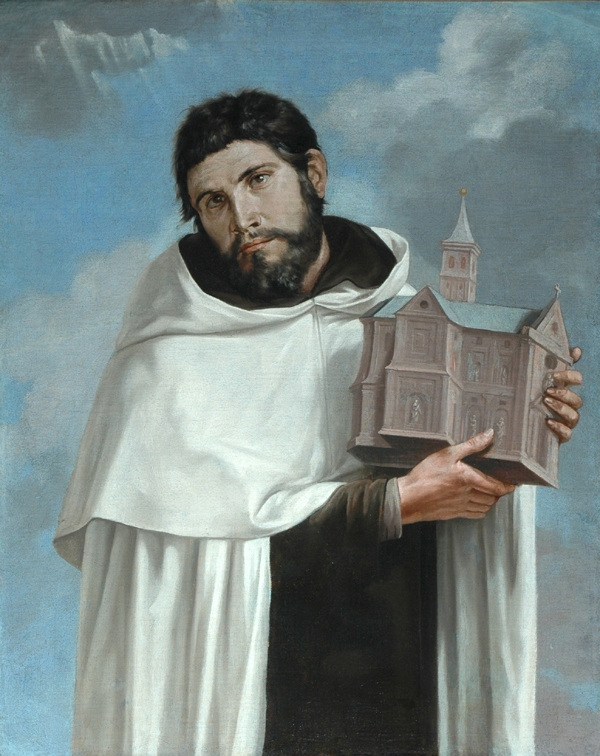
Wanna see what he looks like?

This picture makes me giggle. He's holding a church and looking completely unexcited:)

Back to the story.  Agabus not only reminds Paul of his impending suffering (again) but also gives him what we pastors like to call a practical illustration. Agabus shackled his feet and hands to Paul's belt (which probably looked like this). This was to show what position he would be in if he were to continue on to Jerusalem; fastened to the belts of Jews who hate him. (vs. 10-11)

Everyone who heard this begged Paul not to go. (v. 12) Paul wanted it all to stop! He was going to go no matter what anybody said.  It was his calling and he was willing to follow that call, even if it led to death. (v. 14)

Paul left for Jerusalem. (v. 15) More believers decided to accompany him and Luke. (v. 16) The Christ-followers in Jerusalem met him at the port when he arrived and welcomed him warmly. (v. 17)

The whole leadership of the church in Jerusalem got together and met with Paul (James, the brother of Jesus, being the bishop). They wanted to know all the things God had done through his three missionary journeys. (vs. 18-19) They were all stoked! (v. 20)


But...

There's a growing problem. Many Jews have also come to faith in Christ, however, they all continue to follow the law of the Old Testament (or of Moses) very strictly.  This is why there was so much controversy over the issue of circumcising Gentile converts.

Word had gotten back to the Jews in Jerusalem that Paul had been teaching Gentiles to ignore the ritual of circumcision (In fact, Paul, the Jerusalem church and all of the apostles agreed to this, right? They even reference this in verse 25!). I wonder why James is making it sound like Paul was the mastermind behind this.  Now Paul probably did teach the Gentiles to ignore other Jewish customs, as well. (v. 21)

Both Christian and non-Christian Jews hated Paul.

James tells Paul that they have decided a way to disprove the rumors that he doesn't observe Jewish customs. Go with four guys to the temple to assist in their purification ceremony. (vs. 23-24)

Paul goes the next day to the temple and is part of the ceremony, telling onlookers when their heads would be shaved and when the appropriate sacrifices would be offered. (v. 26) This all was supposed to take place seven days after this announcement. But Jews from the province of Asia (or more specifically, Ephesus) formed a mob, grabbed him and instantly tried to get other Jews to oppose him, as well. 

Paul was accused of defaming Jews, teaching others not to follow Jewish laws and by bring Gentiles into the temple (v. 28, only Jews were allowed into the temple). They accused Paul of taking Trophimus (the "foster child" Paul supported), a Gentile, into the temple even though no one actually saw it happen! (v. 29)

These accusations were very serious and were taken very seriously.  The city was rocked with a great riot in response. Paul was dragged out of the temple and the mob began to beat him mercilessly. (vs. 30, 32) The only reason they didn't succeed in killing him right then and there was because someone alerted the Roman authorities of it. (Remember, it was illegal for any Roman occupied nation to execute anyone. It would've been a double-whammy since Paul was actually a Roman citizen!)

The Roman commander had Paul arrested for "starting the riot" and had him bound with two chains.

Agabus' prophecy had come true.

What follows reminds me of Jesus' trial before Pilate so much.  Like Pilate, this Roman commander asks who he is and what's their charge against him. (v. 33) But since no specific charges could be determined from the crowd (which reminds me of the statements given in the accusations toward Jesus in Mark 14:55-56), Paul was ordered to be taken to the fortress (or soldiers' barracks to be under direct custody of the Roman military; Jesus was, too). 

This is what Agabus meant when he predicted that Paul would be lead by Jews to be handed over to Gentiles. (v. 34)

The soldiers had to literally lift Paul above the crowd because the mob wanted to kill him. (v. 35) And just like they had done for Jesus in Luke 23:21, they shouted for his death! (v. 36)

It was a good thing that Paul spoke to the commander in charge because the information they had on Paul was completely bogus. They actually thought he was an Egyptian insurrectionist! (v. 37-38) Many scholars think the Roman commander was referring to Theudas from Acts 5:33-36, in which Gamaliel mentioned to the high council. However, if he is, his facts are WAY off!  Gamaliel says that not only did Theudas have 400 (not 4,000 followers), but oh yeah, THEUDAS WAS ALREADY KILLED!!

Paul told them his identity and was granted permission to address the angry mob on the steps of the fortress. Everyone was silent. (vs. 39-40)

And he said...


Questions

1.) Paul is constantly reminded of his future suffering in Jerusalem. How would you deal with that? Would that make you more bold or would you be constantly thinking twice about it? Does that make you respect Paul's loyalty and drive even more?

2.) Imagine what Paul could've been thinking during this process. He has taken so much time and energy to preach and debate with countless Jews about the gospel.  He gets constantly fed up with their stubborn attitudes but he always persisted in reaching them.  However, they returned his literally blood, sweat and tears with wild accusations and persistently requests for his death.  In one word or phrase how would you describe Paul's conflicted feelings towards Jews in this chapter?

3.) Are you not friggin' psyched to find out what Paul said to these people?

March 3, 2012

Day 51 - Acts 20

This post has it all; adventure, death, humor and tears.


Let's get to it!

Acts 20 (Read it here)

Mapping out Paul's third missionary journey is difficult enough for us in the 21st century. So refer to this helpful map, if you'd like.

Paul leaves Ephesus and heads toward Macedonia (v. 1), encouraging all believers he meets in every town he passes. (v. 2) Instead of sailing east to Syria, he sailed west to Greece to escape the death threats. (v. 3) Even more new men are traveling with Paul. (v. 4) These men have very interesting back stories and future roles that they would fill.

Sopater's name literally means savior of his father, which may be why he is the only man to have the name of his father, Pyrrhus, listed.

Aristarchus was one of the believers that was dragged to the amphitheater by the silversmiths of Artemis shrines in Ephesus. (Acts 19:28) However, the interesting thing about him is that his father was the elected governor of Thessalonica! This would mean that Aristarchus was, most likely, wealthy and sacrificed a lot to travel with Paul.  He would be arrested with Paul later.


Secundus would later be commissioned by Peter and Paul to preach the gospel in what is now western Estonia (northern Europe). It may have been one of the first Christian cities of that region. He became the first bishop of the church in Abula there in Estonia.


Gaius and the former synagogue leader, Crispus, were two of the most influential leaders of the church in Corinth. Gaius and the apostle John (writer of the gospel of John and 1st, 2nd and 3rd John) would become friends, as well.

Tychicus was a protege of Paul, specializing in traveling and encouraging believers in many different churches. Paul mentions that Tychicus would be the messenger that would deliver his letters to the churches in Ephesus and Colossae. (Those letters would become the biblical books of Ephesians and Colossians, by the way) He also may have been the bishop of a church, as well.  Catholics have debated for centuries that he could've led one of three churches in Asia Minor or Cyprus.

He and Trophimus (whose name literally means "foster child") were both from Ephesus. Trophimus would accompany and be cared after by Paul all the way until his imprisonment in Rome.

I tell you this because Paul was mentoring all these guys! Look at the many lives he would touch through these men. From Pyrrhus, the father of Sopater, to Northern Europe through Secundus!

I didn't want to fail to mention that both Timothy and Luke are with Paul, too. You can tell Luke is there by seeing the words "us" and "we" in verses 5-6.

-------------------

One night Paul got a little long-winded with a message he was preaching to all the previously mentioned men and a few others. (v. 7) The room was dimly lit with lamps. (v. 8) You can see this coming, can't you? What would happen to you if you were listening to a message for hours in a dimly lit room? You'd get a little drowsy, right?

Well, a dude name Eutychus fell asleep on a windowsill and fell to his death from three stories up! (v. 9) Paul went to his rescue, reassuring the believers that he was fine, even though Eutychus was, in fact, dead. (v. 10) When a few believers came to take Eutychus home, he wasn't even hurt! No wonder his named means fortunate in Greek:) Its very easy to miss the fact that Paul essentially resurrects a guy who fell asleep during his sermon.

--------------------

After leaving Troas, Paul was making a mad dash in efforts to reach Jerusalem by Pentecost. (v. 16) Still being far away from Jerusalem he urged the leaders of the church in Ephesus to meet him in Miletus. (v. 17) They do without delay.
 You can see in Paul's speech to these church leaders that he has a little anxiety and sadness in his voice. He assures them they he has cried many tears, endured being stoned and constantly chased by the plots of the Jews (v. 19), while never shrinking back from preaching the necessity of faith in Lord Jesus. (v. 21)

But going back to Jerusalem will be different. God is directing him to go back there. (v. 22) He is certain that he will be imprisoned and persecuted by the Jews there. (v. 23)  In what I can only compare to Jesus' moments in the garden of Gethsemane, Paul knows that he has to go even though he knows he will suffer. 

Paul then says something I find incredibly profound, "my life is worth nothing to me unless I use it for finishing the work assigned me by the Lord Jesus." (v. 24)

Did you catch that?

His life is worth NOTHING unless he not only does what God calls him to do, but FINISHES it! All the work he's already done, the persecution he's endured, the people he has reached, healed, etc, would mean nothing if he doesn't go all the way. His job is to preach about God's wonderful grace and not stop until God takes him home.

Man, if only I felt that driven. Paul is really humbling me right now.  How about you?

And because he has obeyed God's purpose for his life and preached to everyone he could, it cannot be his fault if anyone is separated from God. (v. 26) This is also a direct challenge to all those there for them to continue to preach and lead the church! (v. 28)

These leaders also have to be on the lookout for false teachers and anyone who wants to cause division by distorting the truth. (v. 30) Paul lets them know that this won't be easy, it took many tears to protect them for the three years he was in Ephesus. (v. 31)

He dedicates them and their work to God. (v. 32)

He assures them that hard work is inevitable. Paul had not only supported his traveling and ministry by his tentmaking, but he also supported those who traveled with him.  But it has been a huge blessing to him! He wants them to experience the same. (vs. 34-35)

They prayed together and openly cried together because this would be the last time they would ever see Paul, their mentor, face-to-face. (vs. 36-38)
 
Questions

1.) Paul is accompanied by those that would ultimately be extremely influential Christian leaders.  Who do you hang around with?  Do you have friends that look up to you or do you have friends that you admire for their character and passion? Why or why not? What's the use of a friend if they're not leading you closer to Christ or if you're not showing them Christ through your life?

2.) Paul knows that going back to Jerusalem will not end good for him but that doesn't stop him from going.  He even says that stopping now would negate every good thing he has done so far.  Do you feel as if you have a purpose for your life? If so, are you living it out? If not, do you know what you were made to do? If so, what's stopping you?

3.) Paul says over and over that his work has caused many tears. Who have you cried for?  What in this world breaks your heart?

March 1, 2012

Day 50 - Acts 19

I'm excited for you all to read tonight's post. Its a good one.  It has gotten me thinking about how I would respond if I were present in Ephesus at the same time.


I hope you take the time afterwards to read over and answer the questions so that you can be challenged to take in what you've read.


Let's get to it!

Acts 19 (Read it here)

With every missionary journey Paul goes on, the distance traveled is simply astonishing.  The first journey totaled 1,400 miles, the second one was 2,800 miles and this one he's about to embark on will take over 2,700 miles and between 3-4 years to fully complete.

There are even more stops on this trip than of the previous journey, so here's a map for your reference.

Apollos was in Corinth and Paul was making his way through the interior cities again (Tarsus, Derbe, Lystra, Iconium and Antioch of Pisidian, to be exact) visiting believers before arriving in Ephesus. (v. 1) Somehow it came up in conversation where Paul asked these believers, whom he had never met before, "Did you receive the Holy Spirit when you believed?” They didn't even know who the Holy Spirit was! (v. 2)

Paul already had his suspicions as to why these believers were a little under-informed. He asked, "what baptism did you experience?" Their answer of "the baptism of John," (v. 3) confirmed his suspicion since Apollos had traveled through this same region from Egypt on his way to Corinth. Before meeting and being advised by Priscilla and Aquila, Apollos only knew about the preaching of John the Baptist, not of the apostles who were instructed by Jesus who followed after John. (v. 3)

Both baptisms (of John the Baptist and Jesus) called for believers to repent of their sins before being baptized. (v. 4) But there was something about baptizing in the name of Jesus (which John the Baptist didn't), not of the baptism itself, that paved the way for the Holy Spirit.

As soon as the believers realized this, they were [re]baptized in Jesus' name. (v. 5)

And when I say "paved the way for the Holy Spirit" that doesn't mean that they were simply given the Holy Spirit after being baptized. It was when the apostle Paul laid his hands on them (and, no doubt, this would include praying to God, asking Him to send the Holy Spirit) that they received the Spirit. And when they did, these twelve men spoke in different languages and began prophesying, too! (vs. 6-7)

Paul then went on to Ephesus and continuously preached for three months at the local synagogue, probably arguing and debating with Jews. (v. 8) Didn't he say he was going to stop that and only preach to Gentiles?   Like clockwork, some Jews began to publicly reject Paul's message and teach others to ignore the Way of Jesus. Paul had had enough, so he began discussing at a local lecture hall instead. (v. 9)

Paul would end up staying in Ephesus for over 2 years. And the believers who came to faith began spreading the faith to others all throughout the province of Asia! (v. 10, or modern-day Turkey) Even the disciples were making new disciples!

Paul began performing even more extraordinary miracles. Anything that touched his skin and then were placed on sick people healed them! (vs. 11-12)

A group of Jews were inspired by Paul's miracles and began casting out evil spirits themselves. Even though they weren't Christ-followers, they used Jesus' (and Paul's) name in hopes to cast out demons who couldn't be extracted any other way. (v. 13)  They were basically using the name of Jesus like a magic spell, as if it were abracadabra.

These Jews were all brothers whose father was Sceva a leading (possibly Levite) priest. (v. 14) Other than this reference by Luke in Acts 19, nothing else is known about Sceva...or his sons.

However, one time when they tried to use Jesus' and Paul's name to cast out a demon, the demon responded with saying, "I know Jesus and Paul, but who do you think you are?" (v. 15) Just imagine the fear that would tingle down your spine as you heard a demon telling you this! Creepy.

Right after saying this, the demon took control of its host body, attacked the seven sons ferociously, stripped off their clothes and left them bleeding as they scampered away naked. (v. 16)

Everyone in Ephesus heard this story and it freaked them out! People started to respect the name of Jesus because of what happened to these seven guys. (v. 17) And many who had been practicing incantations, witchcraft and idolatry changed their ways, became Christ-followers and burned their books! (vs. 18-19)

Paul left Ephesus along with his assistants Timothy and Erastus (v. 22, who would later become the treasurer of the church in Corinth).

When Paul left, all hell broke loose in Ephesus. Since so many began to follow Christ and forsake the idols they had previously worshiped, production and sales of silver Artemis shrines sharply decreased. Demetrius, a silversmith and employer of many workers called a meeting in which he blamed Paul's teaching about the uselessness of idols as the downfall of his and the employees' financial stability. And he claimed to be concerned about the lack of respect for Artemis, as well. I think the money was really the issue, though but who can know for sure? (vs. 24-27)

Ephesus was the center of worship for Artemis, who was the Greek goddess of the wilderness who supposedly blessed her followers with hunts of wild game and with healthy children. It was believed that babies died in childbirth and women of diseases because of judgement from "mother" Artemis. Statues such as this one depicted her with many breasts since she was the heavenly mother of Ephesus.  Many would travel to Ephesus for feasts and festivals in her honor, bringing money into their local economy, which meant the sale of many silver shrines.

These men were furious and started a riot at the amphitheater. (v. 29) The rioters dragged two of Paul's friends as objects of hatred. (v. 30) Paul wanted to go out there, too, but other believers and even those in local city officials wouldn't let him because they knew it was the rioters' plans for him to show up so they could kill him. (v. 31)

It was a maddening scene. More and more people showed up at the amphitheater wondering what was going on. (v. 32) Fearing a complete rebellion and even deportation of Jews, Alexander (who was a coppersmith) was pushed forward by other Jews in hopes that he could also voice his opposition to Paul. But since he was a Jew, as well, the Ephesians wouldn't let him speak; they yelled all the louder.  (vs. 33-34)

The mayor of Ephesus finally got their attention. He validated Artemis' honorable standing within the city of Ephesus (v. 35) while also vindicating the believers who were present by saying, "they have stolen nothing from the temple and have not spoken against our goddess." (v. 37) It was Paul who had done that.

He admonished them to settle the matter in court instead of by violence. (v. 38) Maybe he was protecting Paul (since Paul did have many friends in local government) or because the mayor was fearful of what the Romans would do if they had to come to squelch the riot. (v. 40) The possibility of having Roman soldiers come to Ephesus quieted Demetrius, his workers and the crowd; they dispersed shortly after. (v. 41)


Questions

1.) The seven sons of Sceva were severely punished, not by God, but by a demon for incorrectly using Jesus' name! How much respect do you have for the name of Jesus? How do you use his name? How does it make you feel that you could be attacked by Satan by not honoring it?

2.) When people heard about what happened to the sons of Sceva, many people burned books, repented of their ways and became believers. Has some sort of tragedy ever knocked sense into you and made you think twice about your relationship (or lack thereof) with God? What was it and how did you change?

3.) Money may have been the root issue as to why Ephesus went into an uproar after Paul left town.  When people became Christians, they stopped buying useless idols.  What things do you no longer partake in or buy since you've became a Christ-follower (if you claim to be one)?